.png?width=2000&name=Fuel%2c%20Labor%2c%20and%20Billing%20Errors%20Header%20(14).png)


Company
If your business depends on trucks, drivers, and recurring routes, you’re already managing one of the most complex parts of operations—whether you realize it or not. Many route-based businesses starting out begin by using spreadsheets to plan deliveries, track stops, and manage billing. And at first, that works.
Until it doesn’t.
As routes grow, customers increase, and expectations rise, spreadsheets quickly become a bottleneck instead of a solution. That’s where route management software comes in. So what exactly is route management software—and why are spreadsheets no longer enough for modern route-based businesses?
What Is Route Management Software?
Route management software is a comprehensive system designed to manage every aspect of route-based operations in one connected platform.
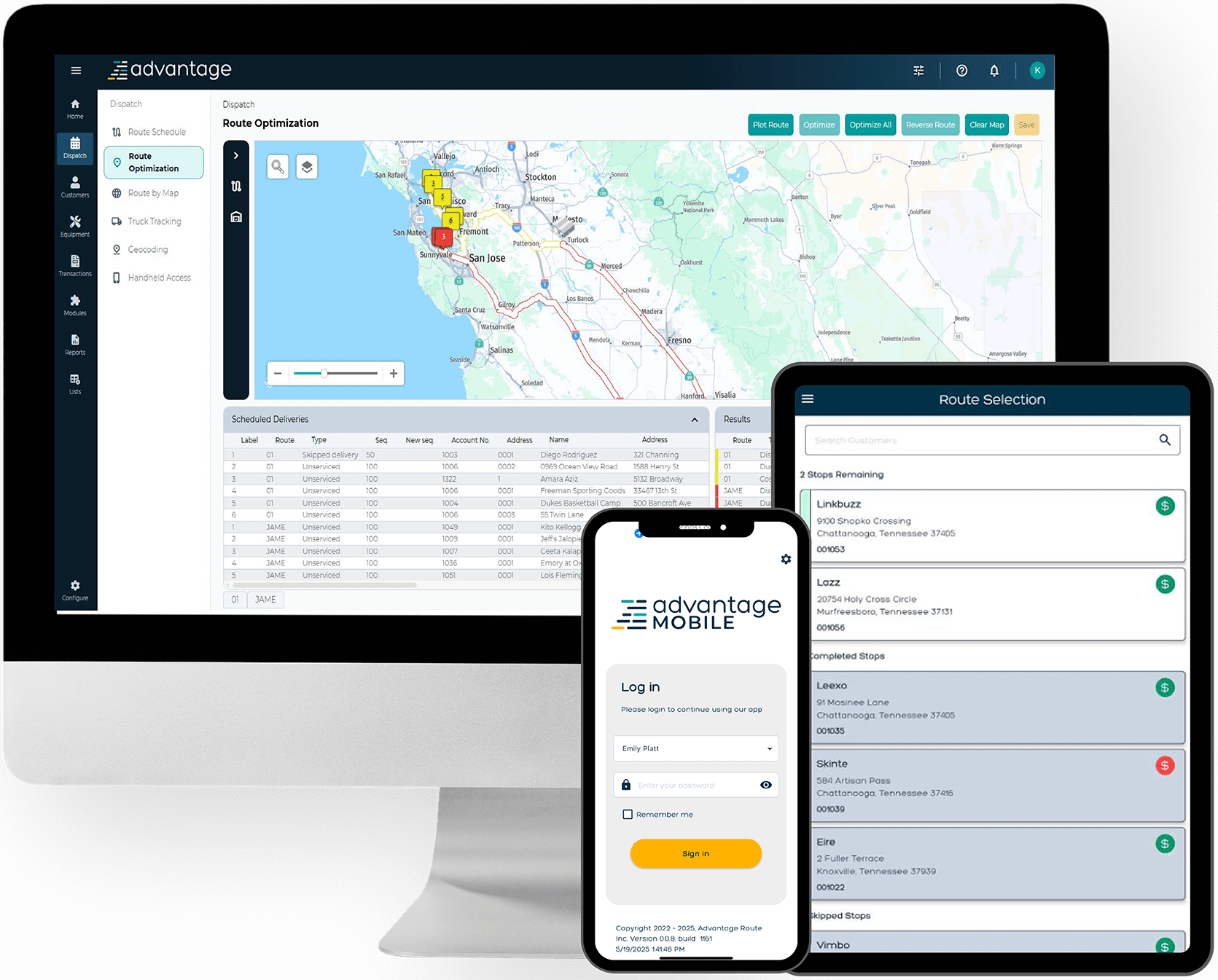
Unlike spreadsheets or basic GPS tools, route management software helps businesses:
- Plan and optimize delivery and service routes. This means strategically organizing delivery routes, trucks, and stop order to minimize cost and maximize efficiency.
On paper this requires one to manually print tickets, assign drivers to routes, create sequence stops and track inventory by hand. Using software, you can automate all of your routes/stops, invoicing, view your data in real-time and reduce fuel costs and driver time by using technology to map routes more efficiently. - Manage drivers, vehicles, and schedules in an integrated database with the click of a button, ensuring clear communication and reduced chance of error.
- Track orders, deliveries, and service stops through advanced GPS technology, providing an increased level of driver safety and accountability, faster response times and a higher competitive advantage.
- Capture delivery data in real time. (no need for paper tickets) This allows you to react almost instantly, reduce emergency stops, improve customer experience and lower your operating costs.
- Automate billing, invoicing, and payments immediately after a delivery or at the time of the sale.
- Gain visibility into route performance and profitability which will help you to make future decisions and adjust your strategy as you go.
In short, route management connects operations, drivers, inventory, and accounting—eliminating manual work and guesswork.
Industries that rely heavily on route management software include propane delivery, bottled water, beverage gas, liquid recycling, medical gas, linen services, dairy and food DSD, and equipment service companies.
Why So Many Businesses Still Use Spreadsheets
Spreadsheets feel familiar. They’re inexpensive, flexible, and easy to set up when a business is small.
Many companies rely on spreadsheets to assign routes, track stops and customers, estimate delivery quantities, record driver notes, and prepare invoices. While spreadsheets can handle basic organization, they weren’t built to manage the fast-moving, real-time demands of route-based operations. As businesses grow, these manual tools often create inefficiencies, errors, and limited visibility into daily performance.
The problem isn’t that spreadsheets are “bad.” The problem is that they were never designed to run these kinds of dynamic, real-world route operations.
The Limitations of Spreadsheets for Route Management
As your business grows, these spreadsheets start to break down in some very real ways:
1. No Real-Time Visibility%20(1200%20x%20600%20px)%20(8).png?width=498&height=249&name=Enfite%20Event%20Blog%20header%20(2000x600)%20(1200%20x%20600%20px)%20(8).png)
Spreadsheets are static. They can’t tell you:
-
Where drivers are right now: Real-time GPS tracking provides visibility into each driver’s current location, allowing dispatch to monitor route progress, adjust schedules if needed, and respond quickly to delays or urgent customer requests.
-
Whether a stop was complete: Live status updates show if a delivery or service stop has been successfully completed, partially fulfilled, rescheduled, or skipped, eliminating guesswork and reducing the need for follow-up calls.
-
If a customer needs more product: Integrated usage data, tank monitoring, or historical delivery patterns can signal when a customer is approaching low levels, enabling proactive scheduling instead of reactive emergency deliveries.
-
If a delivery was missed or delayed: Immediate notifications flag missed, delayed, or failed stops, allowing the office to address issues quickly, communicate with customers, and prevent service disruptions or billing errors.
By the time data makes it back to the office, it’s already outdated. Having this data appear to you in real-time ensures that your team is able to make decisions and react in the most efficient and productive way possible.
2. Manual Data Entry = Errors
Relying on paper tickets and manual data entry introduces frequent errors such as billing mistakes, lost paperwork, and incorrect inventory counts. These inefficiencies do more than just slow down operations; they directly reduce profitability and damage customer trust through avoidable service failures.
3. Poor Scalability
Spreadsheets might work for 2 trucks, but they struggle with 10, and break completely at 25+.
As routes, drivers, and customers increase, spreadsheets become harder to maintain, harder to audit, and nearly impossible to standardize across the business.
4. Disconnected Systems 
Most spreadsheet-based operations still rely on:
- Separate Accounting Software: Manual data entry leads to errors and delays. Discrepancies in field deliveries (e.g., wrong product "Checked In") aren't seen by accounting in real-time, resulting in slow invoicing and inaccurate cash flow reporting.
- Separate Inventory Tracking: Without live data, the "Load & Check" process fails. The warehouse may show stock that is already committed to a route, leading to "short-ships" and damaged B2B relationships.
- Separate Dispatch Tools: Disconnects prevent "Day Label" logic from working. If the dispatch tool is unaware of "Holiday Calendar" adjustments, drivers are sent to closed businesses, wasting fuel and labor—the opposite of high ROI.
- Separate Driver Communication: Relying on private messaging creates data silos. Critical field insights, like permanent "Stop Sequence" changes, are lost instead of being captured in the CRM, preventing the company from adapting and growing.
This creates data silos, duplicate work, and constant reconciliation between systems.
5. No Route Optimization
Static spreadsheets fail to account for real-world variables like distance, customer priorities, and usage patterns, leading to operational bottlenecks (constraints or choke points). This lack of dynamic optimization results in inefficient routing, increased fuel expenses, and significant waste of driver productivity.
How Route Management Software Solves These Problems
Route management software replaces spreadsheets with an integrated, automated system built specifically for route-based businesses.
Centralized Operations %20(1200%20x%20600%20px)%20(9).png?width=606&height=303&name=Enfite%20Event%20Blog%20header%20(2000x600)%20(1200%20x%20600%20px)%20(9).png)
When everything lives in one integrated system (from orders and routes to drivers, inventory, deliveries, and invoicing) — operations become streamlined and fully connected.
Instead of switching between spreadsheets, paper tickets, and separate accounting platforms, all data flows through a single source of truth, improving accuracy, visibility, and efficiency across the entire business.
Real-Time Data from the Field
Drivers use mobile devices to:
-
View routes and stops: Drivers can access their assigned routes and detailed stop lists directly from a mobile device, including customer information, delivery instructions, service notes, and optimized sequencing. This eliminates confusion, reduces missed stops, and ensures each driver knows exactly where to go and what needs to be completed.
-
Capture deliveries and services: As deliveries or service tasks are performed, drivers log them immediately in the system, documenting what was delivered, serviced, or adjusted. This creates a real-time operational record and eliminates reliance on handwritten notes or memory.
-
Record quantities and signatures: Exact quantities delivered, products exchanged, and services performed are entered digitally at the point of completion, along with customer signatures captured electronically. This provides accurate proof of delivery and reduces billing disputes.
-
Update status instantly: Delivery statuses—such as completed, partially delivered, rescheduled, or unable to service—are updated in real time, giving dispatch and office staff immediate visibility into route progress and any issues that arise.
-
The office sees updates in real time—no waiting, no guessing: Because all data syncs automatically, the back office has live insight into deliveries, inventory usage, and route progress throughout the day. This eliminates end-of-day paperwork delays and allows faster invoicing, proactive problem-solving, and better decision-making.
Automated Billing & Faster Cash Flow
Completed deliveries automatically flow into invoicing and payment processing.
What does this mean?
-
Fewer billing errors: Automated pricing, real-time data capture, and digital proof of delivery reduce manual entry mistakes and eliminate discrepancies that often lead to disputes or corrections.
-
Faster invoices: Invoices are generated immediately upon delivery completion, shortening the billing cycle and ensuring customers receive accurate charges without delay.
-
Improved cash flow: Quicker invoicing and fewer payment disputes accelerate collections, helping revenue move back into the business faster and more predictably.
-
Happier customers: Accurate billing, transparent documentation, and timely communication create a smoother experience that builds trust and long-term customer loyalty.
Smarter Route Planning
Modern route management software helps you to:
-
Optimize routes to reduce miles and fuel: Intelligent route planning systems calculate the most efficient sequence of stops based on location, delivery windows, traffic patterns, and vehicle capacity. By minimizing unnecessary miles and idle time, companies lower fuel costs, reduce vehicle wear and tear, and improve overall route profitability.
-
Balance workloads across drivers: Smart route allocation distributes stops and delivery volume evenly among drivers, preventing burnout for some while others finish early. Balanced workloads improve productivity, maintain morale, and ensure consistent service levels across the team.
-
Adjust routes quickly when things change: Real-time visibility allows dispatchers to reroute drivers instantly if a customer needs urgent service, a stop is canceled, traffic conditions shift, or equipment issues arise. This flexibility keeps operations responsive without disrupting the entire day’s schedule.
-
Prepare for seasonal demand or emergencies: Historical delivery data and forecasting tools help businesses anticipate busy seasons, weather-related spikes, or unexpected demand surges. With better planning, companies can allocate trucks, staff, and inventory proactively rather than scrambling to react.
Scales as You Grow
Whether you have 2 trucks or 200, route management software grows with you—without becoming harder to manage.
Why Route Management Software Is a Competitive Advantage
.png?width=512&height=256&name=paper%20billing%20(1).png) Today’s customers expect on-time deliveries, accurate billing, and clear, proactive communication. However, companies that rely on spreadsheets often lack the real-time visibility and automation needed to deliver that consistency.
Today’s customers expect on-time deliveries, accurate billing, and clear, proactive communication. However, companies that rely on spreadsheets often lack the real-time visibility and automation needed to deliver that consistency.
As a result, delays, errors, and communication gaps become more common, making it harder to meet rising customer expectations.
Businesses using route management software gain:
-
Better visibility into operations: Real-time access to routes, deliveries, inventory, and financial data provides a clear picture of daily performance, enabling faster decisions and proactive problem-solving.
-
Lower operating costs: Optimized routes, reduced manual work, and fewer billing errors decrease fuel expenses, labor hours, and administrative overhead.
-
Higher margins: Improved pricing accuracy, better route efficiency, and reduced revenue leakage help protect profit on every delivery and customer account.
-
Improved customer retention: Accurate billing, on-time deliveries, and transparent communication build trust, strengthening long-term relationships and reducing churn.
-
Less stress for office staff and drivers: Streamlined workflows, automated processes, and clear visibility reduce last-minute issues, paperwork burdens, and daily operational pressure across the team.
When Is It Time to Move Beyond Spreadsheets?
If any of these sound familiar, it’s time:
-
Your routes feel chaotic instead of controlled: Without structured planning and real-time visibility, routes may change constantly, stops feel reactive, and dispatch is stuck solving problems instead of proactively managing efficiency.
-
Billing errors are common: Frequent pricing mistakes, missed charges, or manual entry issues create disputes, rework, and lost revenue, putting strain on both your team and your customer relationships.
-
Drivers rely on paper tickets: Paper-based processes slow down documentation, increase the risk of lost or illegible records, and delay invoicing until tickets are returned and entered manually.
-
You lack visibility into daily operations: Without live data on routes, deliveries, inventory, and payments, it’s difficult to know what’s happening in the field or make informed decisions in real time.
-
Growth feels painful instead of exciting: As your business expands, outdated systems struggle to keep up. This ends up creating bottlenecks, operational stress, and inefficiencies that make scaling feel overwhelming rather than rewarding.
Spreadsheets helped you get started—but they weren’t built to help you scale, and that is where the proper software comes in!
Final Thoughts
Route management software isn’t just a technology upgrade—it’s an operational upgrade.
It replaces manual processes with automation, replaces guess work with real data, and replaces disconnected systems with a single source of truth. For route-based businesses that want to grow profitably and efficiently, spreadsheets simply aren’t enough anymore.
Are you ready to give yourself an Advantage? Schedule a demo with us today!