

Company
It usually starts with something small. A driver finishes a long day of deliveries. The route went smoothly, customers were happy, and invoices were closed out. But when the truck is reconciled at the end of the day, the numbers don’t quite add up. A few cases are missing. Nothing major, but it’s not the first time.
Over the course of weeks or months, those small discrepancies turn into something bigger: inventory shrinkage. For route delivery companies, shrinkage isn’t just lost product—it’s lost profit, reduced visibility, and operational inefficiency that quietly eats into margins.
What Is Inventory Shrinkage in Route Delivery?
Inventory shrinkage refers to the loss of product between the warehouse and the final delivery point. In route delivery operations, this can happen at multiple stages—during loading, transit, or at the customer site. Because route delivery businesses rely on mobile inventory and driver-managed stock, they are especially vulnerable to discrepancies without the right systems in place. Luckily, there are ways to significantly reduce and prevent this from occurring!
What Are the Most Common Causes of Inventory Shrinkage?
1. Manual Tracking Errors
Many route delivery companies still rely on paper tickets or spreadsheets to track inventory. This creates opportunities for human error—miscounts, incorrect entries, or missed updates. Over time, these small mistakes compound, making it difficult to pinpoint where inventory was actually lost.
2. Load-In and Load-Out Discrepancies
If trucks aren’t loaded and verified with precision, inventory issues begin before the route even starts. Products may be miscounted, loaded incorrectly, or assigned to the wrong route. Without a reliable system to validate starting inventory, every delivery that follows becomes harder to reconcile.
3. Theft and Unauthorized Product Use
While less common, internal or external theft can contribute to shrinkage. Without proper tracking and accountability, it’s difficult to detect patterns or identify where losses are occurring.
4. Breakage and Damage in Transit
Route delivery often involves frequent stops, tight schedules, and varying road conditions. Products can be damaged during transport, especially if they’re not properly secured or tracked. If damaged goods aren’t recorded accurately, they appear as unexplained shrinkage.
5. Invoicing and Delivery Mistakes
Errors at the point of delivery—such as incorrect quantities, missed items, or failure to record returns—can create discrepancies between what was delivered and what was billed. This not only impacts inventory accuracy but also customer trust and revenue.
The Real Cost of Shrinkage
Inventory shrinkage doesn’t just affect your warehouse counts—it impacts your entire operation:
Reduced Profit Margins from Lost Product: Inventory shrinkage directly impacts your bottom line by cutting into already tight margins. Every missing or unaccounted-for product represents lost revenue that cannot be recovered, especially in high-volume route delivery operations. Over time, these losses compound, making it harder to maintain profitability, accurately forecast inventory needs, and scale the business efficiently.
Increased Administrative Time Spent Investigating Discrepancies: When inventory doesn’t align, teams are forced to spend valuable time digging through paperwork, invoices, and delivery records to find the source of the issue. This manual investigation process is time-consuming and often inconclusive, pulling staff away from more strategic tasks and slowing down overall operations. Without clear visibility, resolving discrepancies becomes reactive rather than preventative.
Lower Driver Accountability and Performance Visibility: Without accurate, real-time tracking of inventory and deliveries, it becomes difficult to measure driver performance or identify where breakdowns are occurring. This lack of visibility can lead to inconsistent processes, repeated errors, and limited accountability across the team. Over time, it creates operational blind spots that make it harder to enforce standards and improve efficiency.
Decreased Customer Satisfaction Due to Errors and Inconsistencies: Inventory discrepancies often result in incorrect deliveries, missing items, or billing inaccuracies—all of which negatively impact the customer experience. When customers receive the wrong products or are charged incorrectly, it erodes trust and can lead to lost business. Consistent errors and lack of communication make it difficult to maintain strong customer relationships in a competitive delivery environment.
For growing route delivery companies, these issues can quickly scale if left unaddressed.
How to Reduce Inventory Shrinkage in Route Delivery
The good news? Shrinkage is preventable with the right processes and technology.
Implement Real-Time Inventory Tracking
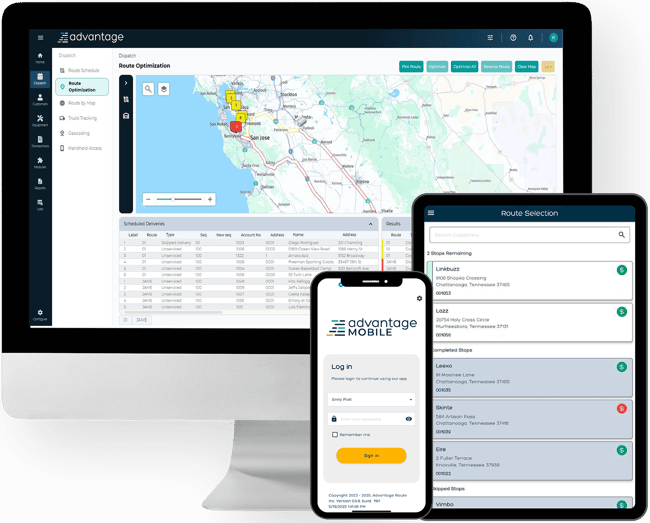
Modern route accounting software provides real-time visibility into inventory levels on each truck. Using inventory tracking tools such as the "On-hand reports" (these show the calculations and quantities) through the Master Inventory View, allows you to view, change or readjust any of your operations knowing what you have readily available for use.
This means every product movement—load, delivery, return, or adjustment—is captured instantly. With accurate, up-to-date data, businesses can quickly identify where discrepancies occur and take corrective action.
Digitize the Delivery Process
Replacing paper-based systems with mobile applications eliminates many of the manual errors that lead to shrinkage.
Drivers can:
- Record Deliveries in Real Time: Drivers can log each delivery as it happens, capturing accurate timestamps, quantities, and customer confirmations. This real-time data entry eliminates delays, reduces errors from manual paperwork, and ensures dispatch and back-office teams always have up-to-date delivery information.
- Track Inventory as It Moves: With continuous inventory tracking throughout the route, every product loaded, delivered, or adjusted is accounted for. This end-to-end visibility helps prevent shrinkage, improves inventory accuracy, and allows companies to quickly identify and resolve discrepancies.
- Capture Returns and Damaged Goods Immediately: Drivers can instantly record returned or damaged items at the point of service, including quantities and reasons. This ensures accurate inventory counts, proper documentation, and faster resolution for credits or replacements—while preventing these items from being misclassified as lost product.
- Generate Accurate Invoices on the Spot: Mobile invoicing allows drivers to create and finalize invoices at the time of delivery, reflecting exact quantities delivered or adjusted. This reduces billing errors, accelerates cash flow, and provides customers with clear, accurate documentation before the driver leaves the stop.
This creates a clear, traceable record for every transaction. Access to these records makes judgement calls and organization that much better. Digital inventory reports that are embedded into our software tools are crucial for the success of any delivery company, and utilizing this software is a major game changer.
Strengthen Load Verification Processes
Before trucks leave the warehouse, inventory should be digitally verified against route plans to ensure complete accuracy from the start. By using barcode scanning or mobile verification tools, route delivery companies can confirm that the right products are loaded, quantities match exactly, and inventory is assigned to the correct route. This proactive approach eliminates common loading errors, reduces discrepancies in the field, and sets drivers up for more efficient, accurate deliveries throughout the day.
Increase Driver Accountability
When drivers have clear visibility into their inventory and know it’s being tracked—accountability naturally improves.
Route accounting systems provide detailed reporting on:
Inventory Variances: Tracking inventory variances helps identify discrepancies between expected and actual product counts on each route. By monitoring these differences in real time, companies can quickly pinpoint where losses are occurring—whether during loading, transit, or delivery and take corrective action. Consistent visibility into variances improves inventory control, reduces shrinkage, and strengthens overall operational accuracy.
Delivery Accuracy: Delivery accuracy measures how consistently orders are fulfilled exactly as requested, including correct products, quantities, and pricing. High delivery accuracy reduces returns, billing disputes, and customer complaints, while improving trust and reliability. Monitoring this metric allows route delivery companies to identify errors, refine processes, and ensure a consistently high level of service.
Route Performance: Route performance evaluates how efficiently each delivery route operates, including factors like stop completion rates, on-time deliveries, mileage, and driver productivity. By analyzing route performance data, companies can uncover inefficiencies, optimize routes, balance workloads, and improve overall delivery execution. Strong route performance leads to lower costs, faster deliveries, and a more scalable operation.
This helps managers identify trends, coach drivers, and prevent recurring issues.
Monitor Performance with Data and Reporting
Data is one of the most powerful tools in reducing shrinkage. With reporting tools, companies gain the ability to analyze shrinkage trends over time, identify high-risk routes or products, and pinpoint driver-specific discrepancies. These data-driven insights provide a clear view into where losses are occurring and why, enabling teams to address issues at the source. As a result, businesses can shift from reactive problem-solving to proactive optimization, improving efficiency, accountability, and overall route delivery performance.
Turning Shrinkage Into Opportunity
Inventory shrinkage might start as a small problem, but it’s also a signal. A signal that processes can be improved, visibility can be enhanced, and operations can become more efficient.
Route delivery companies that take a proactive, technology-driven approach don’t just reduce losses—they gain a competitive advantage. With better data, stronger accountability, and streamlined workflows, they can deliver more accurately, operate more efficiently, and grow with confidence.
Because at the end of the day, it’s not just about preventing loss—it’s about building a smarter, more profitable route delivery operation.
Find out more about your solutions here!