.png?width=2000&name=Fuel%2c%20Labor%2c%20and%20Billing%20Errors%20Header%20(13).png)


Company
In route delivery operations, dispatching is the nerve center that keeps everything moving. From assigning routes to responding to real-time changes, effective dispatching directly impacts delivery speed, customer satisfaction, and overall profitability.
Dispatching has significantly evolved over time and every route delivery company should be utilizing the best tools and practices within their own daily dispatch operations.
What Is Dispatching?
Dispatching is the central process that coordinates routes, drivers, and deliveries to ensure orders are completed efficiently and on time. It has evolved from manual methods like pen and paper, to spreadsheets, and now to advanced software that enables real-time tracking, automated route optimization, and seamless communication.
Modern dispatching can be manual, static, dynamic, or fully automated, with the most effective operations leveraging technology for flexibility and scalability.
By following best practices—such as optimizing routes daily, maintaining real-time visibility, improving driver communication, and reducing manual work—route delivery companies can increase efficiency, lower costs, and deliver a better customer experience.
The Evolution of Dispatching
Dispatching has come a long way, evolving alongside technology and customer expectations.
1. The Old Way: Pen and Paper
Not long ago, dispatching looked very different than it does today. Picture a dispatcher standing over a desk covered in paper maps, scribbled route sheets, and a ringing phone that never seemed to stop. Every route had to be planned by hand. If a driver got delayed or a customer called with a change, it meant flipping through paperwork, making more calls, and doing your best to adjust on the fly. It worked—but it was slow, reactive, and full of guesswork.
 Challenges:
- Time-consuming manual route planning: Building delivery routes by hand takes hours each day, slowing operations and limiting efficiency as order volume grows.
- Lack of real-time visibility: Without GPS tracking or live updates, dispatchers can’t monitor driver progress or respond quickly to delays.
- High risk of human error: Manual data entry and planning increase the chances of incorrect addresses, missed stops, and inefficient routing.
- Limited ability to adjust routes in real time: Mid-day changes like traffic or new orders are difficult to manage, leading to delays and poor delivery performance.
2. The Spreadsheet Era
Then came spreadsheets. For many route delivery companies, this felt like a major leap forward. Suddenly, customer lists were organized, routes could be duplicated, and planning became a bit more structured. But underneath it all, the process was still manual. Dispatchers were still piecing together routes without real-time visibility, and communication with drivers remained fragmented. As businesses grew, spreadsheets started to show their limits—especially when speed and accuracy became more important.
Improvements:
- Better organization of customer and route data: Spreadsheets allowed dispatchers to store and manage customer information, delivery details, and routes in a more structured, searchable format.
- Easier route duplication and planning: Recurring routes could be copied and adjusted quickly, reducing the time needed to plan daily deliveries.
Limitations:
- Still largely manual processes: Dispatchers still had to build and adjust routes by hand, limiting efficiency and increasing workload as operations grew.
- No real-time tracking or visibility: Spreadsheets lacked GPS integration, making it impossible to monitor driver locations or delivery progress in real time.
- Limited scalability for growing operations: As delivery volume increased, spreadsheets became harder to manage, leading to slower planning and higher risk of errors.
- Difficult communication between dispatch and drivers: Without integrated communication tools, updates relied on phone calls or texts, causing delays and miscommunication.
3. Modern Dispatch Software
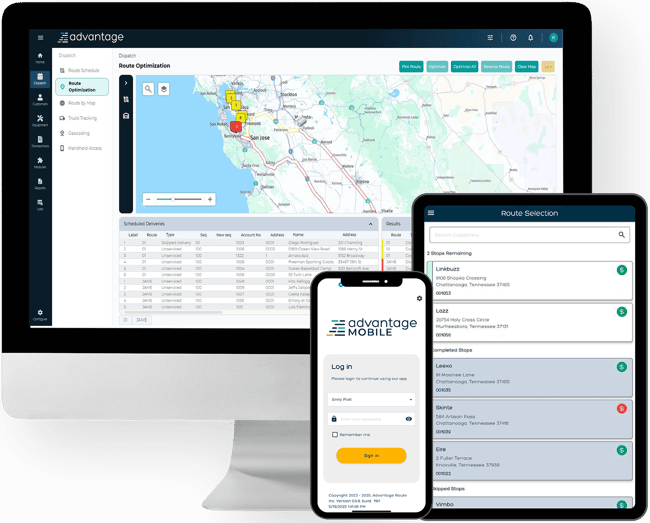
Today, dispatching has entered a completely different era. Modern route delivery software has transformed dispatch from a daily scramble into a strategic advantage. Routes can now be optimized automatically in seconds. Dispatchers can see exactly where drivers are in real time, adjust routes instantly when something changes, and communicate updates without missing a beat. What used to be reactive is now proactive—problems are solved before they escalate, and efficiency is built into every route.

Capabilities include:
- Automated route optimization: Software instantly creates the most efficient delivery routes, reducing miles driven, fuel costs, and planning time.
- Real-time GPS tracking: Dispatchers can monitor driver locations and delivery progress live, enabling faster decisions and improved on-time performance.
- Dynamic route adjustments: Routes can be updated in real time to account for traffic, delays, or new orders, keeping operations flexible and efficient.
- Integrated invoicing and inventory tracking: Delivery, billing, and inventory systems are connected, reducing manual entry and ensuring accurate, up-to-date information.
- Driver communication tools: Built-in messaging and updates keep drivers and dispatch aligned, minimizing confusion and improving delivery execution.
This shift allows dispatchers to move from reactive problem-solving to proactive optimization.
Different Ways to Handle Dispatching
There are several approaches to dispatching, depending on the size and maturity of the operation:
Manual Dispatching
Routes and driver assignments are created by hand each day, making the process time-consuming and difficult to scale.
Best for: Very small operations
Downside: Not scalable and prone to inefficiencies
Static Dispatching
Routes are pre-planned and remain mostly unchanged, providing consistency but limiting flexibility when disruptions occur.
Best for: Predictable, repeat delivery schedules
Downside: Difficult to adapt to disruptions or growth
Dynamic Dispatching
Routes are adjusted in real time based on traffic, delays, or new orders, improving efficiency and responsiveness.
Best for: Growing or high-volume operations
Benefit: Maximizes efficiency and responsiveness
Automated Dispatching
Dispatch software automatically builds and assigns optimized routes, reducing manual work and increasing accuracy and scalability.
Best for: Companies focused on scaling and efficiency
Benefit: Reduces labor while improving accuracy and performance
The Dispatch Process: Step by Step
A well-structured dispatch process typically includes the following stages:
1. Order Intake
Customer orders are collected, reviewed, and verified for accuracy to ensure all delivery details—such as quantities, locations, and delivery windows—are correct before route planning begins.
2. Route Planning
Stops are grouped and sequenced into efficient routes based on:
- Geospatial Location Intelligence: Move beyond basic mapping with proximity-based routing that accounts for precise customer coordinates and service areas. By utilizing "Route" range parameters and sequence sorting, businesses can minimize stem time, reduce fuel consumption, and eliminate the "operational logjams" caused by manual distance estimation.
- Dynamic Delivery Window Management: Optimize your service level agreements (SLAs) by synchronizing "Day Label" logic with specific customer-requested timeframes. Automated scheduling ensures drivers arrive within precise windows, boosting customer satisfaction and preventing the wasted labor costs associated with missed attempts or "Will Call" scheduling errors.
- Complex Product & Equipment Requirements: Streamline specialized deliveries by matching unique cargo needs—such as temperature-controlled assets or specific equipment installations—with the right vehicle and driver skill set. Ensuring that specific items (like rental assets) are accounted for on the correct "RENT" schedule prevents inventory discrepancies and ensures a "Win-Win" outcome for both the warehouse and the end customer.
- Real-Time Driver Availability & Labor Utilization: Maximize your fleet's ROI by aligning driver shifts and duty status with real-time route demands. By automating the "Load & Check" process and tracking driver communication within a centralized CRM, companies can respond to emergency deliveries instantly without compromising regulatory compliance or driver safety.
3. Driver Assignment
Routes are strategically assigned based on driver capacity, experience, and real-time availability to maximize efficiency and ensure reliable deliveries. By factoring in vehicle load limits, route complexity, and driver familiarity with specific territories, route delivery companies can reduce delays, improve productivity, and maintain consistent service levels. Intelligent route planning and driver assignment also help balance workloads, minimize overtime, and enhance overall last-mile delivery performance while ensuring every delivery is completed accurately and on time.
4. Load Planning
Trucks are loaded in the correct sequence to match delivery order, enabling faster stops, reducing idle time, and improving overall route efficiency. By organizing inventory based on optimized delivery routes, drivers can easily access products at each stop without unnecessary searching or rearranging. This streamlined loading process minimizes delays, supports accurate order fulfillment, and enhances productivity across last-mile delivery operations, ultimately helping route delivery companies deliver faster, reduce fuel costs, and improve customer satisfaction.
5. Execution
Drivers complete deliveries efficiently while dispatch teams monitor progress in real time, ensuring full visibility across every route. With live GPS tracking, status updates, and instant communication, dispatchers can quickly respond to delays, traffic conditions, or last-minute changes. This real-time route management improves delivery accuracy, enhances driver accountability, and allows route delivery companies to provide proactive customer updates, optimize performance, and maintain consistent, on-time last-mile delivery operations.
6. Adjustments
Dispatch responds to unexpected issues such as:
- Traffic Delays: Unexpected congestion, road closures, or accidents can disrupt even the most optimized delivery routes. By leveraging real-time GPS tracking and traffic data, dispatch teams can quickly reroute drivers to avoid delays, reduce idle time, and keep deliveries on schedule—improving overall route efficiency and customer satisfaction.
- Missed Stops: Missed deliveries can occur due to incorrect addresses, unavailable customers, or timing issues. With real-time visibility and communication tools, dispatch can immediately identify missed stops, notify drivers, and reschedule deliveries or adjust routes to ensure successful completion while minimizing service disruptions.
- Customer Changes: Last-minute customer requests—such as order modifications, delivery time changes, or location updates—require flexibility in route execution. Dispatch teams can instantly update delivery details and communicate changes to drivers in the field, ensuring accurate deliveries, reducing errors, and maintaining a high level of customer service in dynamic last-mile operations.
7. Completion and Review
Once routes are completed, a modern route delivery company captures and analyzes real-time delivery data to drive continuous improvement and operational efficiency. Key performance metrics—such as delivery times, route efficiency, fuel usage, and proof of delivery—are automatically recorded and stored for reporting. This data-driven approach allows businesses to identify inefficiencies, reduce costs, improve driver productivity, and enhance customer satisfaction. By leveraging route analytics and performance insights, companies can optimize future delivery routes, ensure on-time deliveries, and maintain a competitive edge in the logistics down to the last mile.
Best Practices for Route Delivery Dispatching
To run an efficient dispatch operation, focus on these key areas:
1. Optimize Routes Daily
Even recurring delivery routes should be optimized daily to improve efficiency and reduce operational costs. By using route optimization software or data-driven planning processes, companies can minimize total miles driven, reduce fuel consumption, and shorten drive times. Continuous route optimization also helps adapt to changes in order volume, traffic patterns, and customer needs, leading to more efficient route delivery operations and improved on-time performance.
The Mango Dispatch Manager (MDM) is able to connect all of your data into one system and utilize it to provide the smoothest process and easily match drivers with their routes each day.
Mango Dispatch Manager establishes a centralized routing program that streamlines the process of creating delivery routes through efficient drag-and-drop scheduling. This time-saving feature enables quick updates to handheld data before processing cards and facilitates real-time transmission of changes. The program offers versatility for various activities, enhancing overall operational efficiency.
2. Maintain Real-Time Visibility
Maintaining real-time visibility into driver locations and delivery status is critical for effective dispatch management. With GPS tracking and live route monitoring, dispatchers can quickly identify delays, respond to issues, and make informed decisions on the fly. Real-time visibility improves communication, enhances delivery accuracy, and ensures a higher level of service by keeping operations aligned throughout the entire delivery process.
3. Communicate Clearly with Drivers
Efficient dispatching provides drivers with:
- Accurate stop details: Providing precise delivery information—such as correct addresses, contact details, delivery windows, and special instructions—ensures drivers can complete stops efficiently and avoid delays or failed deliveries.
- Clear delivery instructions: Well-defined instructions for each stop, including drop-off locations, product handling requirements, and customer preferences, help reduce confusion and improve delivery accuracy.
- Immediate updates when changes occur: Real-time communication of route changes, delays, or new orders keeps drivers informed and aligned with dispatch, minimizing disruptions and maintaining on-time delivery performance.
Strong communication reduces errors and delays.
4. Plan for Flexibility
No delivery route goes exactly as planned, which is why route delivery companies must build buffer time into schedules and use dispatch software that supports real-time route adjustments. Unexpected delays like traffic, customer changes, or last-minute orders can disrupt even the most optimized routes. By planning for flexibility and leveraging dynamic dispatch tools, businesses can quickly adapt, minimize delays, maintain on-time delivery performance, and improve overall route efficiency.
5. Integrate Systems
Dispatch software should integrate seamlessly with inventory management, invoicing and billing, and customer data systems to create a unified delivery operation. This connectivity eliminates duplicate data entry, improves accuracy across workflows, and increases overall efficiency in route delivery management.
6. Track Performance Metrics
This enables you to measure key metrics such as:
- On-time delivery rates: Measures how consistently deliveries arrive as scheduled, helping improve customer satisfaction and service reliability.
- Route completion times: Tracks how long routes take to finish, identifying inefficiencies and opportunities to optimize delivery schedules.
- Fuel usage: Monitors fuel consumption across routes to reduce costs and improve overall route efficiency.
- Driver productivity: Evaluates deliveries completed per driver, helping balance workloads and increase operational performance.
This data can be used to continuously refine your dispatch strategy.
7. Reduce Manual Work
Automation eliminates repetitive dispatch tasks like route planning, data entry, and driver updates, improving speed and accuracy. This allows dispatchers to focus on real-time issues, optimize delivery operations, and enhance overall efficiency.
Final Thoughts
Dispatching is no longer just about assigning routes—it’s about orchestrating an entire delivery operation.
Companies that invest in modern dispatch processes and tools gain a significant advantage: faster deliveries, lower costs, and better customer experiences.
As route delivery becomes more competitive, efficient dispatching isn’t optional—it’s essential for growth.
Schedule a demo with us today and we'll dive even deeper into what our dispatching software can do for your business!