.jpg?width=2000&name=Fuel%2c%20Labor%2c%20and%20Billing%20Errors%20Header%20(15).jpg)


Company
Rising fuel prices, labor costs, and increasing customer expectations have made efficiency more important than ever for bottled water delivery companies. Whether you operate a small local route or a large multi-truck operation, reducing delivery costs can significantly improve your margins.
The good news is that many delivery expenses can be reduced through the implementation of smarter routing, betterinventory management, and improved operational visibility.
Here are five proven ways that bottled water delivery businesses can lower costs while maintaining excellent customer service.
1. Optimize Your Delivery Routes
One of the largest expenses for bottled water delivery companies is fuel and driver time "last mile delivery". Inefficient routes lead to unnecessary miles, longer workdays, and higher operating costs.
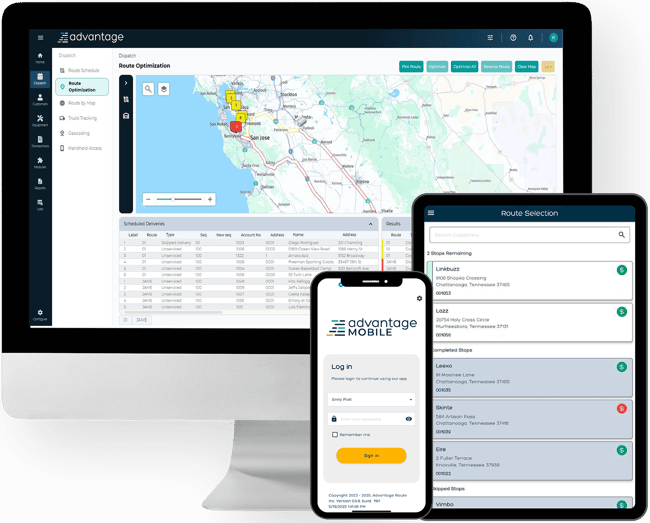
Route optimization helps you:
Reduce total miles driven: Optimized route planning ensures drivers take the most efficient path between stops, eliminating unnecessary backtracking and detours. By grouping nearby customers together and sequencing stops logically, delivery companies can significantly reduce total mileage each day, lowering fuel costs and reducing wear and tear on vehicles.
Decrease fuel consumption: Fuel is one of the largest operating expenses for bottled water delivery companies. When routes are optimized and drivers spend less time idling, backtracking, or sitting in traffic, overall fuel consumption drops. Fewer miles and more efficient driving patterns help businesses control fuel costs even as gas prices fluctuate.
Serve more customers per route: Efficient routes allow drivers to complete more deliveries within the same amount of time. By minimizing travel time between stops and improving route organization, companies can increase the number of customers served on each route without adding additional trucks or drivers.
Minimize overtime hours: Poorly planned routes often cause drivers to run behind schedule, leading to overtime pay and higher labor costs. When routes are optimized and stops are sequenced efficiently, drivers can complete their deliveries within regular working hours, helping businesses reduce overtime expenses and maintain predictable labor costs.
Advantage Route's optimization software automatically builds the most efficient routes based on delivery schedules, order size, and driver availability. Even small improvements in route efficiency can translate into major savings over time and our software is built for real world operations!
2. Use Real-Time Inventory Tracking
Inventory mistakes can quickly increase delivery costs. When drivers run out of bottles on the truck or return with excess inventory, it can lead to missed deliveries, extra warehouse trips, and lost sales opportunities. Real-time truck inventory tracking helps prevent these issues by giving both drivers and dispatch visibility into inventory levels throughout the route. With accurate inventory data, delivery teams can ensure trucks are properly stocked, avoid product shortages at customer locations, reduce unnecessary returns to the warehouse, and improve overall order accuracy.
Better visibility into truck inventory, ensures that your drivers are carrying the right products for each route.
3. Eliminate Paper Tickets and Manual Processes
Many bottled water delivery companies still rely on paper tickets and manual data entry. While this may seem simple, it often creates hidden costs through errors, delays, and additional administrative work.
Digital workflows help streamline delivery operations by enabling drivers to capture deliveries and product returns instantly while on route, eliminating the need for paper tickets and manual data entry later. Drivers can generate invoices directly at the point of delivery, accept customer payments on the spot, and record proof of delivery with digital signatures. This real-time data capture improves billing accuracy, speeds up invoicing, and reduces administrative work for back-office teams.
This reduces paperwork, speeds up billing, and eliminates the need for back-office staff to manually enter delivery data.
4. Reduce Failed or Missed Deliveries
Missed deliveries waste fuel, driver time, and valuable scheduling capacity. When drivers arrive at a location where the customer is unavailable or the order details are incorrect, the cost of that delivery quickly increases due to repeat trips and lost time. Improving communication and delivery visibility can significantly reduce these issues by enabling automated delivery notifications, accurate order confirmation before dispatch, clear delivery instructions for drivers, and real-time customer communication while the driver is on route.
When customers know when their delivery is scheduled to arrive, they are far more likely to be prepared, increasing the chances of a successful first delivery attempt and helping delivery operations run more efficiently.
5. Use Data to Improve Route Performance
Many delivery companies rely on instinct rather than data when managing routes. However, tracking delivery metrics can reveal opportunities to reduce costs and improve efficiency.
Important delivery performance data includes:
Average deliveries per route: Tracking the average number of deliveries completed on each route helps businesses understand how efficiently their trucks are being utilized. If some routes consistently handle fewer stops than others, it may indicate opportunities to rebalance territories, combine routes, or adjust schedules to maximize delivery capacity.
Driver productivity: Measuring driver productivity provides insight into how efficiently drivers are completing their routes throughout the day. Metrics such as stops per hour, time spent at each delivery, and total route completion time can highlight areas where processes can be streamlined or additional training may be beneficial.
Route profitability: Not all delivery routes generate the same level of revenue compared to their operating costs. By analyzing route profitability, companies can identify which routes are highly profitable and which may require adjustments. Factors such as fuel usage, delivery density, and order size all influence the profitability of a route.
Delivery time per stop: Understanding the average time spent at each delivery location can help identify inefficiencies in the delivery process. If certain stops consistently take longer than expected, it may signal issues such as difficult access, unclear delivery instructions, or customer-related delays. Addressing these issues can help improve overall route efficiency and allow drivers to complete more deliveries each day.
Analyzing this data helps identify underperforming routes, optimize schedules, and ensure each truck operates as efficiently as possible.

Wrapping It Up
Reducing delivery costs in a bottled water delivery business isn’t just about cutting expenses—it’s about improving efficiency across your entire operation. By optimizing routes, improving inventory visibility, digitizing delivery workflows, reducing missed stops, and leveraging delivery data, companies can significantly lower operating costs while improving customer service. For many bottled water delivery businesses, the kind of route accounting software that we provide has the tools needed to make these improvements and gain better control over daily delivery operations.